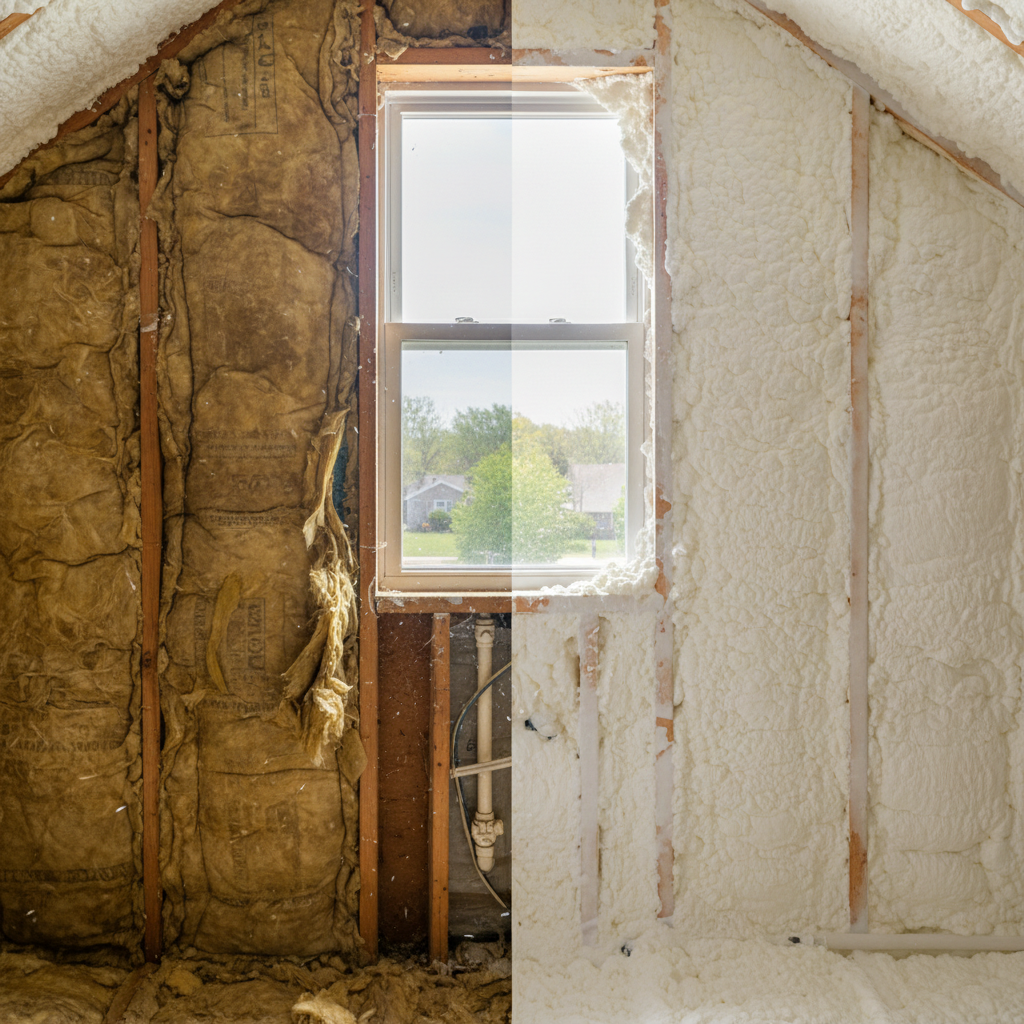
Alright, let's talk about open cell spray foam. It's a fantastic insulation choice for many homes around here, especially with our wild Illinois weather swings. But when you pick open cell, you've usually got two main ways to go: 'flash and batt' or 'full fill.' Homeowners often ask me which one's better, and like most things in construction, it's not a simple 'this one always wins' answer. It really comes down to your goals, your budget, and what your home actually needs.
What's the Difference?
First, let's make sure we're on the same page. Both methods use open cell spray foam. It's light, airy, and expands to fill every little nook and cranny. Plus, it's great for sealing up air leaks and cutting down on noise.
- Flash and Batt: With this, we spray a thinner layer of open cell foam — usually 1 to 2 inches — right against the sheathing in your wall or ceiling cavities. This 'flashes' the surface, creating a really tight air seal. Then, after the foam dries, we come back and install traditional fiberglass or mineral wool batt insulation over it, filling the rest of the space.
- Full Fill: Here, we just spray open cell foam until it completely fills the entire depth of the wall or ceiling cavity. If you've got 2x4 studs, we're aiming for about 3.5 inches of foam. For 2x6s, it's 5.5 inches. No batt insulation needed here; the foam does all the heavy lifting.
Cost: Where Does Your Money Go?
This is usually the first thing people ask, and it's a fair question. Generally speaking, flash and batt can sometimes be a bit more budget-friendly upfront. You're using less spray foam, which is the more expensive material per cubic foot, and you're topping it off with cheaper batt insulation. However, you're also paying for two separate installation processes – spraying the foam, then putting in the batts. That means more labor.
Full fill, on the other hand, uses more spray foam, so the material cost is higher. But it's a single installation process, you know? For some projects, especially if you're really trying to hit high R-values, the cost difference might not be as huge as you'd imagine, or full fill might even be more efficient in the long run. It really depends on the specific R-value you're aiming for and how deep your cavities are. We'll always give you a clear quote for both options so you can compare them fairly.
Durability and Performance
Both methods, when installed correctly, are incredibly durable. Spray foam doesn't settle or sag over time like some other insulation types. It forms a solid barrier that won't break down. The real difference in performance comes down to the air seal and the R-value.
Flash and batt gives you an excellent air seal because that thin layer of foam expands and seals all the gaps. Then the batts add the bulk R-value. It's a good combination. However, you still have to make sure those batts are installed perfectly, without gaps or compressions, to get their advertised R-value. That's where some installers cut corners, but not us at Guardian Insulation.
Full fill offers the absolute best air seal and a continuous thermal barrier. Because the foam fills the entire cavity, there are no potential gaps or thermal bridging issues that can sometimes pop up with batt installation. It's truly seamless. For homes in Des Plaines, especially those older ones with balloon framing or lots of tricky corners, full fill often gives you a superior, more consistent performance against drafts and temperature swings.
Maintenance and Appearance
Good news here: neither option requires any significant maintenance once it's in. Spray foam is pretty much set it and forget it. It's stable, doesn't attract pests, and won't grow mold if we install it correctly in a dry spot.
As for appearance, well, it's insulation! It's usually covered up by drywall or sheathing, so you won't see it. But if you're talking about the exposed look before drywall goes up, full fill looks cleaner and more uniform because the foam completely fills the cavity. Flash and batt will show the foam layer with the batt insulation on top, which is also fine, just a different look.
My Recommendation for Des Plaines Homes
Look, for most homeowners in Des Plaines, especially if you're dealing with an older home or you're really trying to maximize energy efficiency and comfort, I generally lean towards full fill open cell spray foam.
Why? Our climate here is brutal, isn't it? We get those super cold winters where every little draft matters, and then those humid summers where air sealing is crucial to keep the AC working efficiently. Full fill gives you that uninterrupted thermal and air barrier. It's just a more robust, consistent solution. You won't have to worry about potential gaps in batt insulation reducing your R-value or letting air sneak through.
Now, flash and batt isn't bad. It's a great option if you have existing batt insulation that's in good shape and you just want to add an air seal, or if your budget is extremely tight and you still want the benefits of spray foam's air sealing. It's definitely better than just batts alone.
But if you're gutting walls, building new, or just want the absolute best performance for your energy bills and comfort, full fill open cell is tough to beat. It's a bit more of an investment upfront, but the long-term benefits in comfort and energy savings usually make it well worth it. Especially with how our heating and cooling costs keep going up, you want every advantage you can get, right?
When you're ready to talk specifics for your place, give Guardian Insulation a call. We'll come out, take a look, and help you figure out the absolute best approach for your home and your wallet.