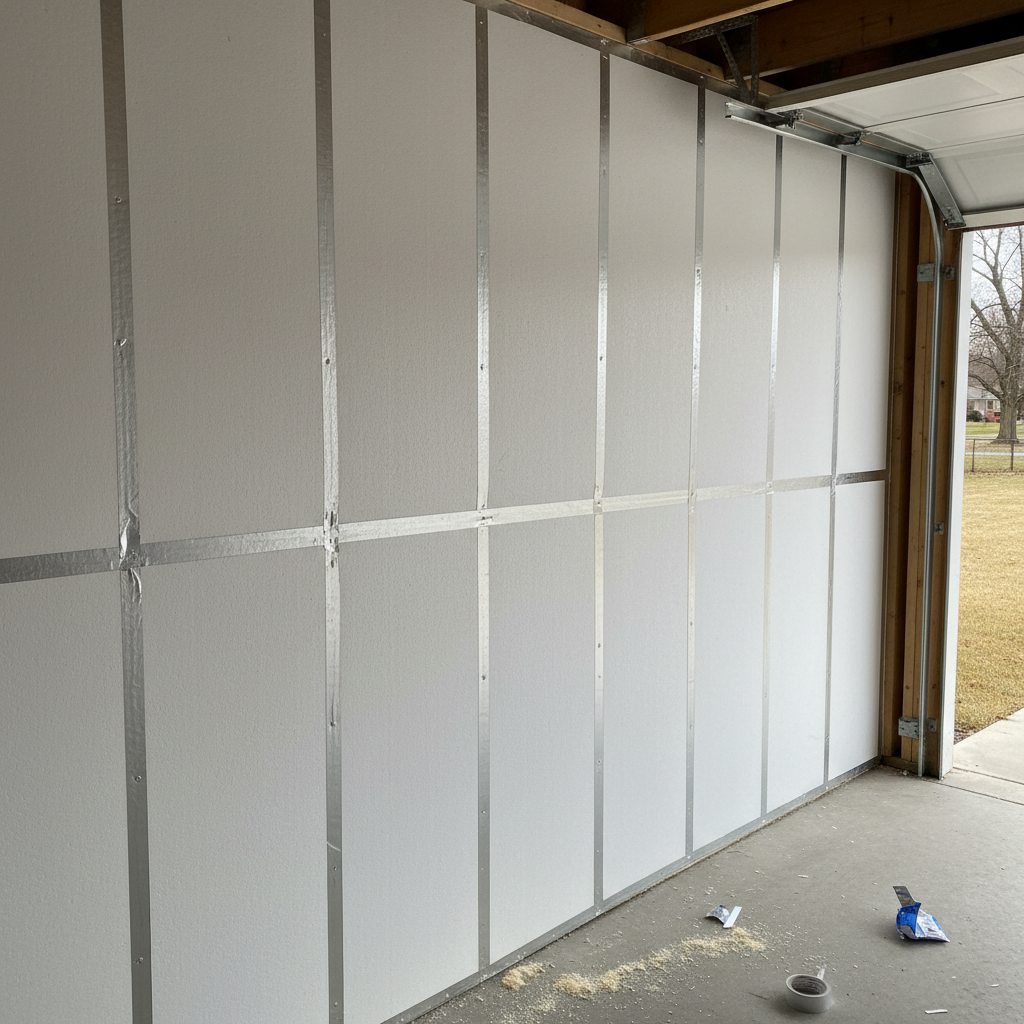
Alright, let's talk garages. You'd be surprised how many folks around Des Plaines, especially those with older homes near the river or in the older sections of town, think insulating their garage is just about keeping it warm in winter. It's way more than that, believe me. I get a lot of questions about garage insulation, and while some are pretty standard, there are always a few that really make you think about the bigger picture. So, I figured I'd tackle some of those deeper questions you might not even know you have.
Does insulating my garage really help with my home's energy bills, even if it's detached?
Absolutely, it can, even for a detached garage. Think about it this way: your home's HVAC system is constantly working to maintain a comfortable temperature. If you've got a garage, attached or detached, that's a big unconditioned space right next to or near your conditioned living area. For attached garages, the heat transfer through that shared wall is significant. Insulating it means less heat loss from your house into the garage in winter, and less heat gain from the garage into your house in summer. That's less work for your furnace and AC, which means lower bills. For detached garages, especially if you use it as a workshop or spend a lot of time in there, insulating it means you're not trying to heat or cool a leaky box. You'll use less energy to make that space comfortable, and you might even find you're not cranking the heat in the house as much because the garage isn't acting as a giant thermal sink nearby. It's a real difference maker.
What's the deal with insulating garage doors? Is it worth the cost?
Oh, it's totally worth it. Your garage door is often the biggest uninsulated opening in your garage. If you've got a standard uninsulated metal door, it's practically an open invitation for outside temperatures to come right in. You can have the best insulation in your walls and ceiling, but if that door is letting all the heat or cold escape, you're fighting a losing battle. Insulating the door itself dramatically cuts down on that heat transfer. It's not just about comfort; it helps protect anything stored in there that's sensitive to temperature swings, like paints, tools, or even your car's battery. Plus, a well-insulated door can actually make your garage quieter, dampening outside noise. We've helped plenty of folks around here with their garage door insulation, and they always notice the difference.
Can insulating my garage help with humidity or moisture problems?
You bet it can. This is a big one, especially with our humid summers here in Des Plaines. Uninsulated garages are prime spots for condensation. When warm, humid air from outside hits cold surfaces inside (like tools, concrete, or even your car), you get moisture. That leads to rust, mold, and a generally unpleasant, damp environment. Insulation, combined with proper ventilation, helps stabilize the temperature inside the garage. It keeps those surfaces from getting too cold in winter or too hot in summer, reducing the temperature difference that causes condensation. It won't solve a leaky roof, mind you, but it'll go a long way in managing ambient humidity and protecting your stuff from moisture damage.
I've heard about different R-values for insulation. What R-value should I aim for in my garage walls and ceiling?
That's a smart question because R-value matters. For garage walls, especially if they're shared with your living space, you want to aim for at least R-13 to R-15 if you're using standard 2x4 framing. If you've got 2x6 framing, you can go higher, like R-19 or R-21. For the ceiling, particularly if there's an unconditioned attic space above or living space above, you should really push for higher R-values, similar to what you'd put in your main attic – R-38 to R-49 is ideal. The goal isn't just to meet minimum code; it's to create a buffer that truly makes a difference. We at Guardian Insulation always recommend considering how you use the garage when we talk R-values. If it's just for parking, you might get away with less, but if it's a workshop or laundry room, you'll want more.
Is there a specific type of insulation that's best for garages, considering temperature swings and potential pests?
There isn't one single