Is Your Crawl Space Costing You Comfort and Cash?
Let's be honest, no one really likes crawling around under their house. But that dark, often damp space under your feet, which is your crawl space, is a very big factor in your home's comfort and energy efficiency. Here in Des Plaines, with our big temperature changes from humid summers to freezing winters, a crawl space that is not insulated or is poorly insulated can be a real problem. You are probably feeling it with cold floors in January or that strange musty smell coming up into your living space. Guardian Insulation has seen this many times in homes all over Des Plaines, from the older bungalows near Lake Opeka to newer builds in Cumberland.
Getting your Crawl Space Insulation right is not just about saving some money on your heating bill. It is also about keeping moisture out, stopping mold, and making your whole house feel better. So, we will talk about what you need to know before, during, and after a Crawl Space Insulation project.
Before You Start: Assess and Plan
Before you even think about buying materials or hiring anyone, you need to understand what is happening down there. Crawl spaces are tricky because they can be vented or unvented. Whether a crawl space is vented or unvented dictates your whole approach to Crawl Space Insulation.
1. Check for Moisture – This is Important.
Moisture is the enemy of insulation. If you have standing water, damp soil, or mold that you can see, you absolutely have to fix that first. Insulating over moisture problems is like putting a bandage on a broken leg. It just makes things worse by trapping the moisture and helping mold grow. You might need to install a Vapor Barrier, which is a thick plastic sheeting that covers the ground. The 2021 International Residential Code (IRC) says you need a continuous Class 1 Vapor Barrier for unvented under-floor spaces. This Vapor Barrier must overlap joints by at least 6 inches and go up the stem wall. Here in Des Plaines, local building codes generally follow the 2021 IRC, so you will want to make sure your Crawl Space Insulation project meets these codes.
2. Vented vs. Unvented Crawl Space
- Vented Crawl Spaces: These crawl spaces have vents to the outside. The idea for these vents was to dry out the crawl space. However, often, especially in our Des Plaines climate, these vents just let in humid summer air or freezing winter air. This makes your home less comfortable and less efficient. If your crawl space is vented, you will typically insulate the sub-floor. The sub-floor is the floor joists directly under your living space.
- Unvented (Encapsulated) Crawl Spaces: This is generally the better approach for Crawl Space Insulation. It means sealing off the crawl space from the outside and treating it as part of your home's conditioned space. With Crawl Space Encapsulation, you insulate the crawl space walls and rim joists. You also often install a heavy-duty Vapor Barrier on the ground of the crawl space.
3. What R-Value Do You Need?
R-value measures how well insulation resists heat flow. The higher the R-value, the better the insulation works. For floors and crawl spaces in Northern Illinois, which is Climate Zone 5, the U.S. Department of Energy recommends an R-value of R-25 to R-30. If you are insulating the crawl space walls in an encapsulated space, you might aim for R-17 or higher for your Crawl Space Insulation.
During the Project: DIY or Pro?
This is where you decide how much work you want to do yourself.
DIY Tasks (If You Are Up for It)
If your crawl space is clean, dry, and easy to get into, you might be able to handle some of the Crawl Space Insulation work yourself. Doing it yourself can save you a good amount of money. Materials for Crawl Space Insulation typically cost roughly $0.50 to $2.00 per square foot.
- Cleaning and Prep: This is a must for any Crawl Space Insulation project. Remove any debris, old insulation, or anything else that should not be there.
- Vapor Barrier Installation: Laying down a heavy-duty polyethylene Vapor Barrier, which should be at least 6-mil thick, on the ground is a common DIY task. Make sure the Vapor Barrier overlaps properly and extends up the foundation walls. This helps control moisture coming up from the soil.
- Batt Insulation (for sub-floor in vented crawl spaces): If you have a vented crawl space and are insulating the sub-floor, fiberglass or mineral wool batts can be a DIY option for Crawl Space Insulation. You will need to cut them to fit snugly between joists and secure them with netting or wire to stop sagging. Remember, fiberglass can absorb moisture, so it is not ideal if you have any dampness in the crawl space.
- Rigid Foam Board (for walls in dry, unvented crawl spaces): For a dry, encapsulated crawl space, Rigid Foam Board can be installed on the walls. Rigid Foam Board is moisture-resistant and good for DIY Crawl Space Insulation projects.
A word of caution: Working in a crawl space is often cramped, dirty, and can expose you to allergens or pests. Always wear appropriate personal protective equipment (PPE). This includes a respirator, gloves, eye protection, and old clothes. If you find mold or signs of pests, stop and call a professional for your Crawl Space Insulation project.
When to Call a Pro (Most of the Time, Honestly)
For most Crawl Space Insulation projects, especially if you are looking for long-term solutions and maximum efficiency, bringing in a professional is the smart move. Professional Crawl Space Insulation installation typically costs between $1.50 to $5.00 per square foot. This cost includes labor. For a 1,000 square foot crawl space, you might be looking at $3,000 to $10,000 for Crawl Space Insulation. For full Crawl Space Encapsulation, it might be $5,000 to $15,000.
- Moisture Issues Beyond a Simple Vapor Barrier: If you have persistent water problems, drainage issues, or a lot of mold, you need an expert. They can assess the root cause and recommend solutions like French drains, sump pumps, or specialized mold remediation before Crawl Space Insulation.
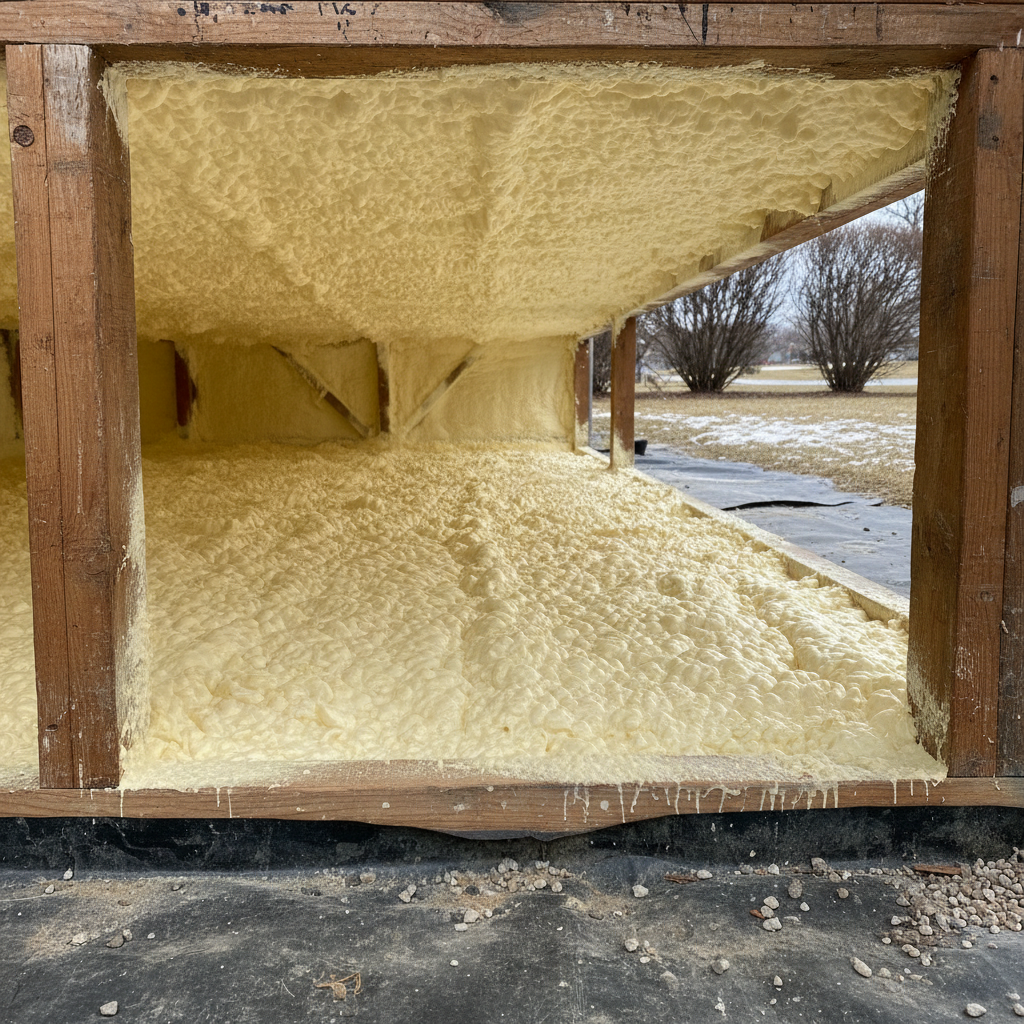
- Spray Foam Insulation: Closed-cell Spray Foam is very good for crawl spaces because it insulates, air seals, and acts as a Vapor Barrier all at once. It has a high R-value, which is R-6.5 to R-7 per inch, and it is water-resistant. However, it requires specialized equipment and training to apply correctly. This is definitely a job for pros like us at Guardian Insulation. Trying to DIY Spray Foam can lead to costly mistakes and poor performance for your Crawl Space Insulation.
- Encapsulation Projects: Sealing and insulating an entire crawl space for Crawl Space Encapsulation involves careful air sealing. It also involves proper Vapor Barrier installation on the ground and walls. Often, it means insulating the foundation walls with Rigid Foam or Spray Foam. It is a complete project that benefits greatly from professional expertise in Crawl Space Insulation.
- Limited Access or Complex Layouts: Some crawl spaces are very hard to get into or move around in. Pros have the tools and experience to work efficiently and safely in tight, awkward spaces for Crawl Space Insulation.
- Ensuring Code Compliance: Building codes for insulation and Vapor Barriers can be very specific. A professional will make sure your Crawl Space Insulation project meets all local Des Plaines requirements.
After the Project: What to Expect and Monitor
Once the Crawl Space Insulation is in, you should notice some immediate improvements:
- Warmer Floors: This is usually the first thing homeowners tell us. No more cold feet in the winter.
- Lower Energy Bills: By stopping heat loss or heat gain through the crawl space, your HVAC system will not have to work as hard.
- Improved Air Quality: Sealing off the crawl space reduces the amount of damp, musty air and potential allergens that can enter your home.
- Fewer Pests: A sealed crawl space is less inviting for rodents and insects. Closed-cell Spray Foam even acts as a deterrent for pests.
Keep an eye on your crawl space, especially after heavy rains or during times of high humidity. Periodically check the Vapor Barrier for tears and the Crawl Space Insulation for any signs of moisture or damage. If you notice any new issues, do not ignore them. Addressing problems early can save you a lot of headaches and money later on. Insulating your crawl space is a solid investment in your Des Plaines home. It makes your living space more comfortable, saves you money on utilities, and protects your home's structure from moisture damage. Whether you tackle some of it yourself or bring in the pros, it is a project that pays off. For homes and businesses in Des Plaines, Guardian Insulation provides Crawl Space Insulation services.