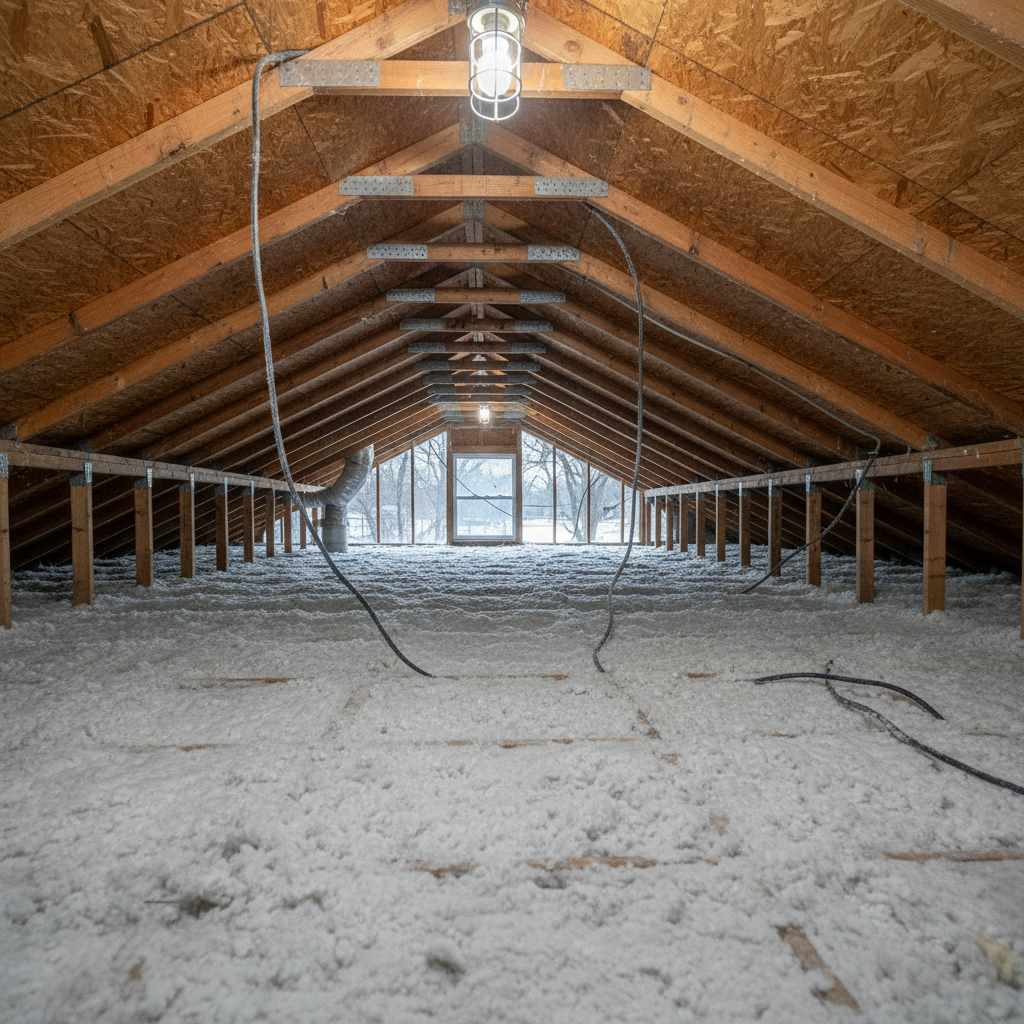
So, you've got blown-in insulation in your attic or walls. Maybe we even put it in for you at Guardian Insulation. That's a really smart move for energy efficiency and comfort, especially with our wild Illinois weather swings. But here's the thing: just like pretty much everything else in your house, it's not a "set it and forget it" kind of deal. You want that insulation to keep working hard for decades, right? Well, here's how you make sure it does.
Extending the Life of Your Blown-In Insulation
Good news first: blown-in insulation — whether it's cellulose or fiberglass — is actually pretty tough stuff. It's not going to just magically expire next year. But its effectiveness? Yeah, that can definitely drop off if you don't treat it right. The two biggest enemies are compression and moisture. When insulation gets squashed down, it loses its R-value. That's just a fancy way of saying it can't resist heat flow as well anymore. Think about a fluffy down jacket; if it's all flat, it's not keeping you warm, is it? Same principle here. So, if you're up in the attic, be careful where you step. Don't just walk all over it. Use attic decking or step on the joists instead. As for moisture, that's usually a sign of a bigger problem, which we'll talk about in a bit.
Another thing to watch out for is air movement. If you've got drafts sneaking up from your living space into the attic, or air leaking out around recessed lights or plumbing stacks, that's what we call 'thermal bypass.' Basically, air is moving *through* or *around* your insulation, making it less effective. Sealing those air leaks *before* insulation goes in is super important, but if you missed that step, you can often still seal them from the attic side. Doing that is a huge part of making your insulation last and perform its best.
What Regular Maintenance Looks Like
Honestly, "regular maintenance" for blown-in insulation isn't like changing your car's oil every 3,000 miles. It's more about just checking on it now and then. I'd say once a year, maybe in the fall before the heating season really kicks in, or in the spring, just poke your head into the attic. You're not trying to re-fluff it or anything. You're just doing a quick visual inspection.
- Look for consistent depth: Does it look even across the whole attic floor? Are there any spots that seem noticeably thinner or flatter?
- Check for disturbances: Did someone go up there to run a cable or fix something and move it around? Is it pushed away from the eaves or the attic hatch?
- Inspect around vents and penetrations: Make sure the insulation isn't blocking soffit vents — those are crucial for attic ventilation, you know. Also, check around exhaust fans, plumbing vents, and chimneys. You want proper clearances there, especially for hot flues.
- Keep an eye on the attic hatch: Is it insulated? Does it seal tightly? A leaky attic hatch is basically like leaving a window open.
That's really it for proactive maintenance. It's mostly about making sure nothing has messed with the initial installation.
Warning Signs of Problems
This is where your annual check-up really pays off. You're looking for red flags that tell you your insulation isn't doing its job, or worse, that there's a bigger issue lurking.
- Water stains or dampness: This is a big one. If you see any discoloration, wet spots, or feel damp insulation, you've got a leak. It could be from your roof, a plumbing vent, or even condensation. Wet insulation is useless insulation, and it can lead to mold. You need to find and fix that leak immediately.
- Matted or compressed areas: If large sections look flat and dense, especially in high-traffic areas or where storage boxes might have been, that R-value is gone.
- Pest activity: Critters just love attics. If you spot droppings, nests, or tunnels in your insulation, you've got uninvited guests. They can compact insulation, tear vapor barriers, and leave behind some nasty stuff. This is a problem that needs addressing quickly.
- Drafts or cold spots indoors: If you're feeling chilly spots inside your home, or drafts coming from ceilings or walls, it could mean your insulation isn't performing. This is especially true in older Des Plaines homes where insulation might have settled or shifted over time.
- Higher energy bills: This is often the first sign something's off. If your heating or cooling bills suddenly jump without a change in usage or weather, your insulation might be losing its effectiveness.
When to Call a Professional
Look, I'm a contractor, so of course I'm going to tell you to call a pro when you need one. But I'm also a homeowner, and I get that you want to handle what you can. So, here's the deal:
- If you find significant water damage or mold: Don't mess with this yourself. Water damage can be extensive, and mold remediation requires specialized knowledge. You need to fix the source of the leak and then deal with the damaged insulation safely.
- If you have a pest infestation: Get an exterminator first. Once the pests are gone, *then* call us. We can assess the damage, clean up, and replace or add insulation as needed.
- If insulation is severely matted or missing in large areas: You might need to add more insulation to bring it up to current R-value recommendations. It's not just about throwing more on top; you want to make sure the existing stuff is still viable and that you're not just covering up issues.
- If you're experiencing persistent drafts or high energy bills and can't pinpoint why: We can do an energy audit, often with thermal imaging, to find those hidden air leaks and insulation gaps. Sometimes it's not just the insulation, but air sealing that's the real problem.
- If you're upgrading or renovating: This is the perfect time to assess and improve your insulation. If you're tearing open walls or doing a roof replacement, that's your chance to get things right.
Your blown-in insulation is a long-term investment in your home's comfort and efficiency. A little attention now and then can save you a lot of headaches and money down the road. If you're in Des Plaines or the surrounding area and have questions or spot any of these warning signs, don't hesitate to give Guardian Insulation a call. We're here to help you keep your home cozy and your energy bills in check.